Here we are nearly at the end of black history month (way to short!). My original intention was to post a number of articles highlighting a few significant figures in black history, particularly those who are not so well known to most but special to me for one reason or another.
A long held belief of mine is that we (African-Americans, Blacks, members of the African Diaspora) suffer from a lack of knowledge of who and where we come from. We have generations, both young and old, who only have knowledge of our history since the slavery period and plenty whose knowledge does not even go back that far. It is this missing link which plays at least a partial part in some of the issues that plague our community today and in generations past. Growing up in Brooklyn, New York in the late 20th century, I like many of my friends lacked positive role models and as a direct result the majority of my friends wound up on the wrong side of the law. Sure there were athletes and entertainers who some admired and aspired to be like but just as many or more idolized those within our community who had what they thought they wanted, money and power (I’m reminded of a line from one of our favorite movies of the time Scarface … “In this country, you gotta make the money first. Then when you get the money, you get the power. Then when you get the power, then you get the women.”). I’m talking about drug dealers and the like.
For just a moment let’s imagine if we truly understood where and from whom we come from. From an early age I began to look to the past and discovered how far we could go. From our collective ancestors I learned of honor, leadership and ambition. It was my intention to share the stories of a number of them during this month that we set aside to reflect on the history of the African diaspora but I procrastinated (and spent a ridiculous amount of time shoveling snow, smh). So here in a condensed form are synopses of three of our ancestors who resonated the most with me and what I learned from them.
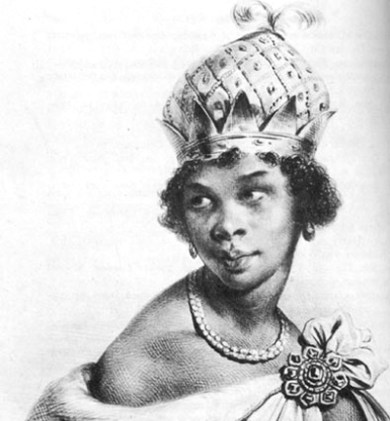
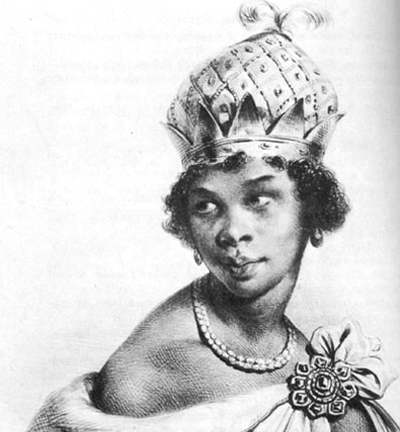
Queen Nzinga of Ndongo and Matamba (present day Angola)
Born in 1583, Nzinga Mbande was the daughter of Ndambi Kiluanji, the ngola, king, of the Ndongo tribe and territories, and his second wife, Kangela. King Kiluanji was also the father to a son by his first wife named Mbandi. As Mbandi was the eldest child he succeeded his father as the ruler of the Ndongo tribe upon his father’s death. During this period Portugal was among the premier slave trading countries and the territories ruled by Mbandi were a desired hunting ground for them. Nzinga was tasked by her brother with negotiating a peace treaty with the Portuguese governor João Correia de Sousa in Luanda in 1599. It was during this meeting that Nzinga first displayed the intellect for which she would become renown. When she met with the Portuguese governor he, in an attempt to intimidate and belittle Nzinga, did not offer her a chair to sit on and instead placed a mat on the floor. This was his way of showing her that he was her superior but Nzinga quickly calculated what was going on and motioned to one of her attendants who fell on her hands and knees and served as a chair for Nzinga for the rest of the meeting. Unable to gain an advantage in the negotiations the governor agreed to terms that favored the African nation.
Knowing the nature of European nations of this time it was inevitable that Portugal would break any agreement that they struck and so it was that when Nzinga ascended the throne upon the death of her brother that the two nations would wage war. It was here that Nzinga’s legend was truly born. A fierce defender of her people and an opponent of slavery, Nzinga battled the Portuguese for the remainder of her lifetime leading her armies into battle and entering into partnerships with other European nations when it benefitted her cause. Though the Portuguese dedicated themselves to capturing or killing her she fought them and any other nation that sought to enslave her people for decades, still personally leading her armies into battle in her sixties. Despite the best efforts of the Portuguese to end her reign Queen Nzinga lived to a ripe old age passing away at the age of eighty in 1663.
Nzinga’s determination and the single minded focus she demonstrated throughout her lifetime should inspire all that followed her as it did me. She is truly one of my greatest role models and one of the most inspiring women to ever live.
Thutmosis III of Kemet (modern day Egypt)
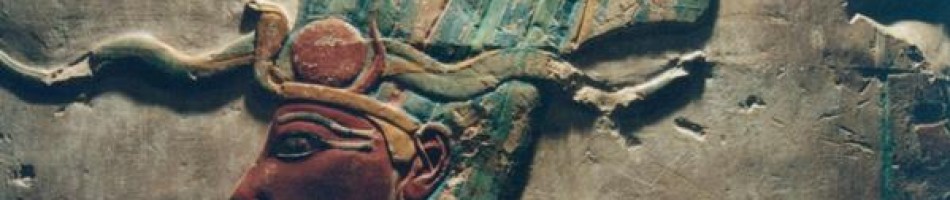
Thutmosis III was the sixth pharaoh of Kemet’s (Egypt’s) famed eighteenth dynasty. Under his leadership Kemet expanded its territories further than at any time before, single handedly transforming Kemet into an international superpower by creating an empire that stretched from southern Syria through to Canaan and Nubia. The greatest of Kemet’s warrior-pharaohs many scholars have referred to him at the “Napolean of Egypt” though when one considers his vast accomplishments and the fact that he came first by many centuries Napolean should be referred to as the “Thutmosis III of France”. All in all he is credited with conquering nearly three hundred and fifty cities during his reign.
Arguably the most important victory of his military career took place early in his reign, the legendary “Battle of Meggido”. It was during this campaign that Thutmosis III displayed the courage a true leader needs when he stood up to his war council and eschewed what they considered the safe route to Meggido and instead chose the more “dangerous” path through the Aruna mountain pass which was said to be only wide enough for the army to pass “horse after horse and man after man”. This proved to be a brilliant strategic move as the army emerged from the pass directly between the rear of the Canaanite forces and Megiddo itself. The ensuing battle became a complete route with Thutmosis III and his army emerging victorious. This campaign drastically changed the political standings in the region. By taking Megiddo, Thutmose gained control of all of northern Canaan, and the Syrian princes were forced to pay tribute to Kemet. In addition, the Assyrian, Babylonian, and Hittite kings all paid tribute (ie., gave gifts) to Thutmose as well.
On my trip to Egypt in 2007 I had the opportunity to view the mummy of this great pharaoh and even in death he stood out from the others in the museum, even throwing up what looked like gang signs … thug life from the ancient world, lol! From Thutmosis III I learned lessons in leadership and of the courage to make a decision that may not be popular but one that you believe to be correct.
Piye / Piankhi of Kush
Piye (his name has also been translated as Piankhi but I’ll stick with the shorter version here) was the first pharaoh of Kemet’s twenty-fifth dynasty but his path to the throne differed from others. His was actually the culmination of a journey began before he was ever born.
The line of kings from which Piye was an integral part of emerged from Kemet’s southern neighbor Kush (or Nubia in what would be present day Sudan and part of Lower Egypt). It was Piye’s uncle Alara who is credited with founding this Kushite dynasty, uniting the majority of Kush under his rule. Alara’s brother Kashta followed him to the throne and extended the borders to Ta-Apet, or Thebes as it is better known.
This was a period of conflict both in Kemet and Kush with multiple Kings ruling different portions of both countries. As I mentioned Alara and Kashta unified Kush during this time but there was no such unity in Kemet with as many as four or five nominal rulers in place at any given period. Alara and those who followed him had a great belief in their destiny and their responsibility to reestablish order, or as the called it Ma’at, and believed that this was the will of Amen (the highest of the divinities known to them as the Neteru). It was this desire to follow the will of Amen that was passed on to Piye.
In the twentieth year of his reign as King of Kush emissaries from within Kemet reached out to Piye and beseeched him to bring unity to Kemet and Piye heeded their summons. With the faith that he was following the will of God, Piye led his armies into Kemet and defeated all of the rulers of the various provinces. The last to fall was the instigator himself Tefnakhte. His words in defeat as chronicled on an ancient stela speak volumes to the effect Piye had on his foes “Be thou appeased! I have not beheld thy face for shame; I cannot stand before thy flame, I tremble at thy might … Long is the course which thou hast brought to me. Cleanse thy servant of his fault, let my possessions be received into the Treasury … Send to me a messenger quickly, that he may expel fear from my heart. Let me go forth before him to the temple, that I may cleanse myself with a divine oath.”
In the end Piye stood triumphant as the Pharaoh of both Kemet and Kush and founded a dynasty that would rule Kemet for nearly a hundred years (under the divine leadership of his descendants) and even when they were eventually driven from Kemet this dynasty would rule Kush for centuries. While European scholars may dispute the racial origins of other dynasty (as ridiculous as they sound at times) this was one dynasty that there is no doubt to their African origins.
From Piye and his predecessors I learned to follow my beliefs and to trust in my destiny. When you walk the path that God has chosen for you then you never walk alone.
In the future I’ll expand on the histories of these honored ancestors and on others whose lives should provide inspiration to those of us today. Our influence on history goes far beyond Martin Luther King Jr and Malcolm X, important as they are, and we should cherish that history!




 Nkosi Speaks